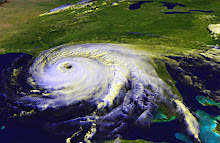
Monday, August 2, 2010

Should You Evacuate?

I'll not soon forget the night I was working as a TV news producer, cranking out the 10pm newscast with a hurricane bearing down on the Gulf Coast. I answered the news hotline and a frantic woman was on the other end. She wanted someone to tell her what to do, where to go. As a news producer, I gave people the facts, information that they could use to make a decision for themselves. 

It wasn't my place to tell this woman whether to stay or go or whether she should head north, east or west, just as I cannot write here what you should do in the event a hurricane is coming your way. I can tell you what to consider when you're making up your mind what to do.  

Where are you? If you're a few miles inland, not in a flood zone, in a well-built house, you can probably ride out the storm at home. You'll want to have at least three days worth of food and water for the humans and animals that share your life. Flashlights, a radio, and extra batteries. Fill up your car and get an extra can of gas in case it's a few days before you can fill up again. Extra gas if you have a generator. Refill your prescriptions if you need to, stock your first aid kit, and it's not a bad idea to have a couple of tarps and a rope on hand in case you have some damage. Board up your windows and pick up anything in your yard that could become a missile in 150mph winds. Be prepared, and you'll probably be just as safe as you would in the closest school.  

Sometimes you have to go: If you live within a mile or two of the coast, you may be at risk of storm surge aka inland flooding. The best way I can describe storm surge is to tell you that it's the highest high tide you will ever experience. It is a wall of water, with waves on top, and it can literally sweep a house off its foundation. The residents of Grande Lagoon subdivision in Pensacola, Florida, learned that from Hurricane Ivan.  About 30 residents stayed in their waterfront homes during the storm, and several died. Even if you don't live right on the coast, if you live in a flood zone, chances are you'll be dealing with high water. Rivers crest and drainage systems are quickly overtaxed, especially when branches and other debris start blowing around. Rising flood waters not only put you at risk of drowning, it's an unsanitary situation that could lead to infection or disease.  

Medical Concerns: Is anyone in your household dependent on electricity? If someone relies on an oxygen machine or other medical equipment, keep in mind that it's very rare not to lose power in a tropical storm. It's not impossible that your power will stay on, but I wouldn't count on it. If it's really difficult for you to evacuate, call your power company NOW and talk to someone about their priorities in a massive outage. They may be able to put you on a "medically necessary" list, ensuring that your neighborhood is one of the first to be restored. Bear this in mind: power crews can't just rush in. Downed trees have to be cleared. New poles may have to be erected. Keep in mind, too, that if something happens during the storm, an ambulance cannot get to you. Even after the storm passes, you may not be able to drive your own vehicle out. Can you survive in isolation for hours or days? Are you in physical condition to clear your own road if necessary? These are the things you should think about now, not when the storm is a few hours away from landfall.  

Where should you go? For information on free public shelters in your area, call your county emergency management or public information office or contact the American Red Cross. Special needs shelters may be equipped to provide electricity when medically necessary, but that's the only thing that's provided. You need to bring with you: food; water; flashlights and radio; batteries; bedding; small toys, games or books; hand sanitizer or wipes; probably even toilet paper. Websites such as BeReady.gov provide checklists that you can print to make sure you have the essentials. Develop your own list, too: medications and personal comfort items, important documents (insurance, identification, deeds, etc.), and pet supplies.  

What about Fluffy? Bear in mind that most shelters don't accept pets, only trained helper animals. If you don't feel safe in your house, please don't leave your pets there, either locked up or running loose. Arrange to board them with your vet. Ask local emergency officials if there is a pet-friendly shelter in your area and encourage them to support one. If you're traveling out of the area, call ahead to find out which hotels and motels will accept pets. Be sure to explain that you're evacuating; some hotels will make exceptions during emergencies.  

The Bottom Line: Only you can decide whether it's safe for you to stay in your home. You know the condition of your house, how well built it is, and whether the neighborhood is prone to flooding. You know the special needs of your family members and your own physical condition. Your decision may also be based on the strength of the approaching storm. As sturdy as our concrete block house is, my husband stayed here through Hurricane Ivan and he doesn't want to do it again! Consider the factors carefully now and come up with a plan and a check list. You don't want to get 200 miles down the road, in the heavy traffic of an evacuation, and remember you left your medication at home or you forgot to turn off the gas. Your plan should cover every step of preparation: 

Secure your home: Cover windows, pick up loose objects and lawn furniture. Unplug electronics that could be susceptible to power surges If you're at risk of flooding, move items to upper shelves or the 2nd floor. 

Pack: Food, medicine and supplies, important documents and photos of your home and belongings, irreplaceable photographs, computer back-up drive 

Don't Forget: Small games or toys to keep children occupied, pets and supplies, emergency phone contact list (don't rely on mobiles, in case battery dies) 

If you wait until the storm is approaching or some other disaster strikes, you will forget something important. Prepare now, so that the thinking is done when you are calm and have plenty of time. When the storm is imminent, you'll be able to act quickly and efficiently, secure in the knowledge that you are doing what's best for your family.

Thursday, July 22, 2010

TS Bonnie heads straight for the oil slick.

I guess we'll get to see if the National Hurricane Center is right about oil and hurricanes not mixing. Supposedly, the oil on the water will help keep the storm from absorbing water and the storm's activity may help disperse the oil faster. We'll see.

Soon.

The NHC's track, as of July 22 at 11pm ET, shows Tropical Storm Bonnie striking Louisiana on Sunday evening. Forecasters say the storm's movement is being guided by a low pressure system on one side and a ridge on the other. Changes in those weather systems could change the storm's track. I'll be monitoring Bonnie until it makes landfall, as should anyone in Texas, Louisiana, Mississippi, Alabama and Florida.

Speaking of the Sunshine State, South Florida and the Keys can expect to feel Bonnie's effects on Friday. Forecasters expect the storm to pass directly over that area as it moves from the Atlantic into the Gulf.

The NHC is not predicting that Bonnie will reach hurricane strength before making final landfall, and that is a good thing.

Still, any bad storm can knock out power, even if it's just for a few hours. If it passes through my area, I will unplug my electronics (a power surge just blasted our desktop computer and it was plugged into a battery back-up surge protector, and the computer was off at the time). I have bottled water to last three days and several cans of tuna and chicken, so if the worst happens, we won't starve. We have working flashlights and batteries for the portable radio.

If you live in a coastal area, you could be hit by a tropical storm or hurricane. Hope for the best, but please be prepared for the worst.

Tuesday, June 22, 2010

A Busy Hurricane Season Begins

The National Hurricane Center, Accuweather, and tropical weather expert Dr. Bill Gray are predicting a busy hurricane season. That means lots of named storms. The busiest year in recent history was in 2005, when we had 27 named storms, so many that the NHC ran out of names and started using Greek letters for the final few.

Adding to the concern this year is the oil leak in the Gulf of Mexico. Oil is already affecting beaches in Louisiana, Mississippi, Alabama and Florida. If the oil is not there yet, the beaches are still emptier than usual and beach businesses are suffering. Fishermen are stuck in port.

The NHC doesn't think that a hurricane will hurt anything and says it might even help the matter. A storm would theoretically break up and disperse the oil, and the slick over the water could keep the storm from sucking up Gulf water for strength. I am skeptical. I fear that a storm would damage the limited containment system now in place, that it will push the oil onto the beaches sooner, and that it will spread the toxic oil farther inland. If you have to wear a hazmat suit to clean it up, how are we going to get it out of our yards and off our houses?

Even if the NHC is right and a hurricane does help clean up the water and it doesn't cause an even bigger mess, a named storm is not going to help improve tourism or the economy of beach communities.

Outside the Gulf, the Pacific has already seen three named storms and Tropical Depression #5 is in the works. Guatemala is still recovering from Tropical Storm Agatha, which killed over 150 people, buried hundreds of homes under mud, and opened a massive sinkhole that swallowed a three-story building.

If you are not prepared for a hurricane, now is the time to start making a checklist for evacuation and stocking up on non-perishable supplies. Trim trees. Look for loose shingles. Repair what you can now, before it gets ripped off in hurricane-force winds and causes more damage. Don't wait until the storm is three days away and try to do it all.

Thursday, March 18, 2010

Time flies towards hurricane season.

Can you believe it's March already? Seems like just yesterday we were celebrating the New Year, and now it's almost spring. I'm certain ready for some warmer weather this year!

We've seen quite a few disasters around the world in 2010. Earthquakes, massive winter storms, flooding. Each incident is a reminder that we must always be prepared for the worst. Better to be prepared and not need your supplies than to be caught without the essentials.

Tim and I have been using our canned goods throughout the winter. Soon it will be time to restock for the season. We try to keep canned tuna and chicken, which on its own might get boring after a few days, but at least we won't starve. We always keep a supply of bottled water. In the winter, we recycled all the old empty bottles. When hurricane season comes, we'll start saving the empties again. If a storm heads this way, we can fill them from the tap for washing and flushing the toilet.

Hurricane Ivan in 2004 was the first time I remember losing water pressure and not having running water after a storm. It's because a lot of infrastructure damage and the wastewater treatment plant downtown flooded. By summer, I think the new wastewater treatment plant will be operational. It's located inland a few miles, so hopefully that won't be a problem we'll face again, but better to fill up a few gallons on the safe side.

Friday, January 22, 2010

Have you learned from Haiti?

You have seen the images of terrible destruction from Haiti, and perhaps you think no disaster in the United States would ever be that bad. The U.S. has construction standards, after all. That's why so many buildings collapsed in that small island nation.

In my mind, though, the Haiti quake just amplifies the fact that we all need to have a disaster kit in our homes and a plan in case of emergency. Buy supplies before you need them. Canned goods and batteries have a shelf life of a few months to a couple of years. When your camera or TV remote needs fresh batteries, rotate the older ones out of the disaster kit and put in a fresh package. Same with the canned goods in your pantry.

Think you're safe from earthquakes? Most parts of the U.S. have experienced quakes in the past. They may have happened a couple hundred years ago, but then again, this month's quake in Haiti was the strongest to hit the island since 1770.

The U.S. Geological Survey has a lot of great information on historic quakes, maps of faultlines, and preparedness information. Did you know that a quake centered in Charleston, South Carolina was felt clear down to Florida? An earthquake centered in Missouri was felt over 2 million square miles! You can read the stories state-by-state on the USGS site.

At the very least, it's interesting reading, and it's certainly something to think about.

Monday, November 9, 2009

Feeling the Winds of Ida

Bands of rain have been passing over the area off and on all day as Ida moved closer to the Northwest Florida coast. The wind is starting to gust now. Tim put up the small yard waste cans; the large garbage cans ought to be all right. The regular trash has some big bags of cat litter in it which should help hold it down. In addition, we piled in some small limbs that had been sitting in the back yard for a while. Our workplaces both shut down early today, which gave us a chance to get those last minute preps done while we still had daylight.

I'm charging my cell phone, and I really ought not to be running the laptop off battery, but it's easier, and I don't expect to lose power. I'll plug it in later to top off the charge, then unplug it when things get bad to protect against surges.

Today, the National Hurricane Center has taken the line off the graphic showing the projected path. Perhaps too many people are focusing on that line and not on the fact that this is a large storm with tropical storm force winds extending 200 miles from the center. That means, the storm is 400 miles across, and even if you're on the very edge of the storm, you will experience sustained winds of 38mph or more.

Ida will not, for most people, be catastrophic, however, hurricanes and tropical storms can spin off tornados. Sustained high winds over several hours can break a weak limb, pull up a loose shingle, and cause other damage. Nothing to worry about unless it's your house that suddenly springs a leak or your car that has a broken windshield from a broken branch.

Now, while tropical storms and National Hurricane Advisories are on everyone's mind, the NHC is looking for input about how their public advisories are presented. Take a moment and go to the NHC's discussion page. They present several examples of public advisories prepared in the current style and the proposed new style. Compare them, then drop the NHC a note letting them know what you like and don't like. This will determine how information is presented in the future.

Sunday, November 8, 2009

Ida makes beeline for Northwest Florida

Hurricane Ida is a Category 2 storm expected to make landfall in Pensacola or thereabouts early on Tuesday. The Pensacola News Journal has some updates on school closings. If you read the comments on the PNJ's website, you'll get the impression that the locals aren't taking this seriously, except as an excuse to get out of going to work or school.

We were gone to an event all day today, so we really haven't done any preparations. Depending on the latest track on Monday afternoon, we may cover our large living room window after work. At this point, the storm is expected to lose quite a bit of steam before making landfall, in large part because of cooler water temps near the coast. We did buy some extra water on Saturday, we have our supply of GoPicnic meals, as well as peanut butter and canned tuna, so we'll be okay. If we should lose power for more than a day, we can drag out the generator (and hope we can get some gas to go in it). However, I'm not anticipating more than a few hours without power, if we lose it at all.

The most important thing will be to take a look around your home, keeping an eye out for anything that can be caught in the wind: loose limbs that could be trimmed before the storm gets here, a piece of shingle or loose gutter that could be tacked down befor the wind tears it away. Pick up toys, put up patio furniture. Anything that can be blown around by a strong gust of wind can become a missile that breaks windows, dents cars, and causes other damage.

It's great that people aren't panicking about Ida, but nor should they (or you, if you're in the path) believe that this storm will not be capable of damage. Any tropical storm has the ability to cause wind damage and flooding. Be proactive for the safety of your home and family and for the people around you.